By the end of 2019 and well into 2020, I felt defeated by the state of the world. Trump was president in the US during a global pandemic, and it seemed like as a species we were going nowhere fast. Things appeared to be going backwards in some cases, particularly with environmental policy, but with many other aspects of society too.
Since then, the people I’ve met, the knowledge I’ve gathered, and the strategies I’ve learned to help affect change at the local level have transformed much of my helpless detachment into active hope. For those interested in charting their own path, cultivating their own personal effectiveness and role in community, I thought breaking down my journey over the past couple years might be of some use.
Real quick—my story up to this point
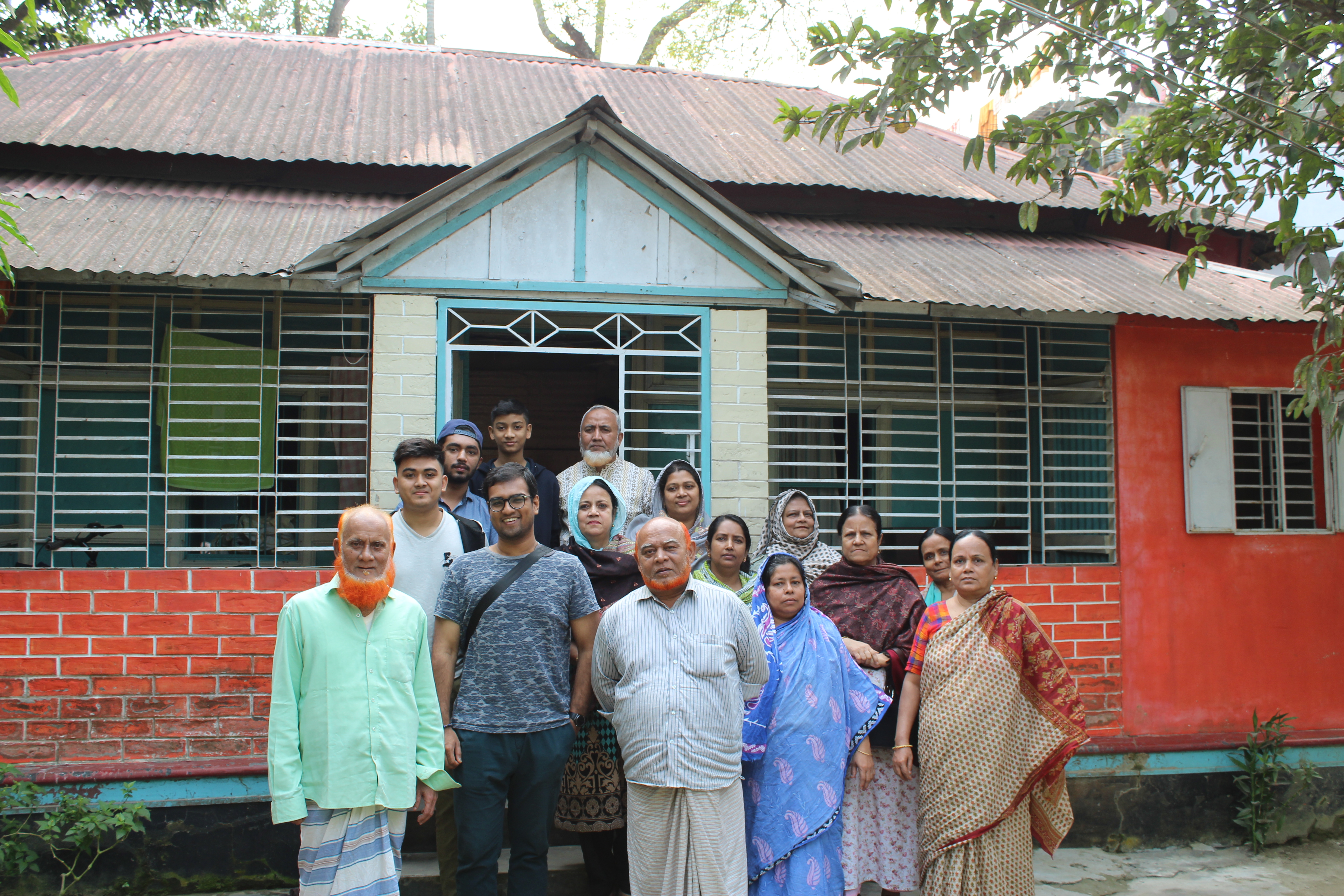
Four years ago, after returning to Minnesota from an eye-opening trip to Bangladesh, I came to realize my lifestyle needed an upgrade.
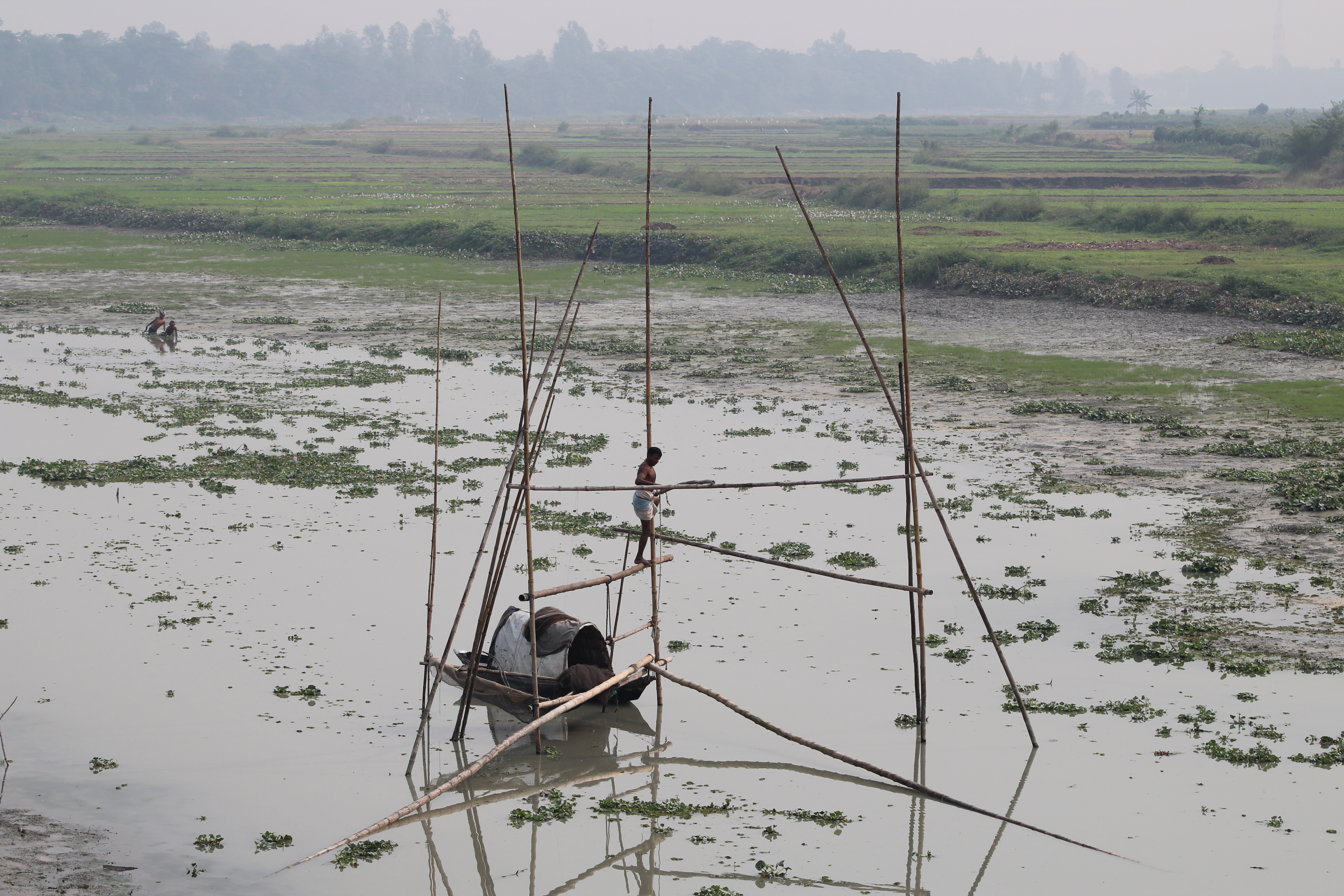
It was my first time visiting Bangladesh as an adult. Between family dinners and treks across the countryside, I witnessed firsthand the displacement of people, dilapidation of crops, and destruction of livelihood that climate change had begun to cause, largely brought on by fossil fuel-guzzling nations that are economically “upstream.”
It gave me pause to see Bangladesh having come so far since my last visit, with its reduction in homelessness and electrified villages, yet now acutely threatened by rising seas. What I saw was a developing nation and its people continue to be forced to bear the consequences of careless environmental practices purveyed by leading nations.
I found myself thinking: where would my home country be in 5? 10 years? With its population density and position on the Ganges River Delta, climate change only spells hardship for the burgeoning nation.
All that is why, upon returning to the states, I couldn’t just stand by, disengaged. And opting for paper straws wasn’t going to cut it. I began to think critically about what role I could play as an American.
To that end, I began researching organizations in Minnesota that were already championing clean energy initiatives and policies. Who was doing the work? I quickly found out about 100% MN, which impressed me not only with their ambitious climate goals, but with cogent strategy and talented people behind those goals. Plus, not gonna lie, I liked their graphic design style. I signed up for their newsletter, and shortly thereafter had a conversation with one of their lead organizers, thus bringing me into the fray of community organizing.
In my short call with the organizer, I began to uncover and voice my motivations for the first time, my life’s narrative, and how my desire to contribute had led me to that point. From there, it was a matter of finding out where my skills and interests could be plugged in.
Wanting to learn more about how change is enacted, I decided to attend a 6-week course on community organizing, where I learned the importance of being grounded in authenticity and facts, as well as practical techniques for rallying the people power needed to make change. I continue to apply and build on what I learned to this day.
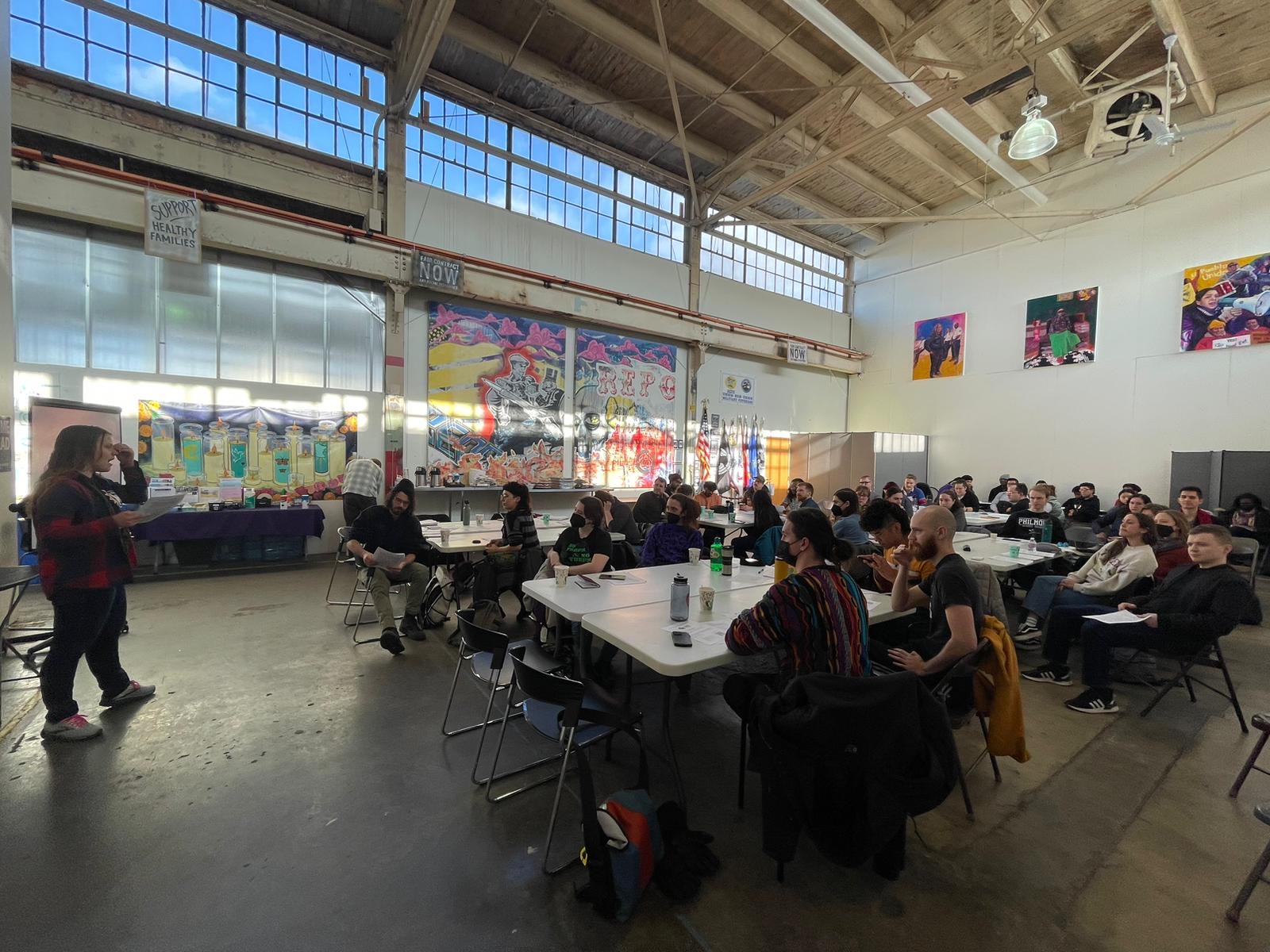
Since then, I’ve contributed to efforts that advance my interests by: having 1-on-1 conversations, holding house meetings, knocking on doors in key neighborhoods, informing neighbors of recent wins that benefit them, supporting climate-forward candidates, giving public testimony at a Minneapolis City Council budget meeting, surveying people about their pain points in life with regard to housing, healthcare, transit, and climate, and by lending my ability as an artist.
I had no idea how to do any of that before I started. It was with support and education from those around me that I was able to find my footing, my voice, my story, and my way to contribute.
That effort wasn’t needed all at once, but rather piecewise over time. As a volunteer, I felt pressure to give more and more time, but ultimately have control over how much feels comfortable. The people around me are wholly understanding, balancing their own work and personal life. I learned that just showing up can go a long, long way.
Through persistent effort, I can say the work I did from 2020 onward contributed in part, however small, to the passing of the 100 percent clean energy transition bill in 2023—a huge step forward in making Minnesota a leading state in the effort to transition from fossil fuel.
Operating at the local level to win progressive policy has a ripple effect that I imagine finds its way, somehow, to Bangladesh. After all, climate-forward policies like the 100 percent bill were built on the successes won by municipalities and states before it, like Colorado, Washington, Maine, and California—to name a few examples.
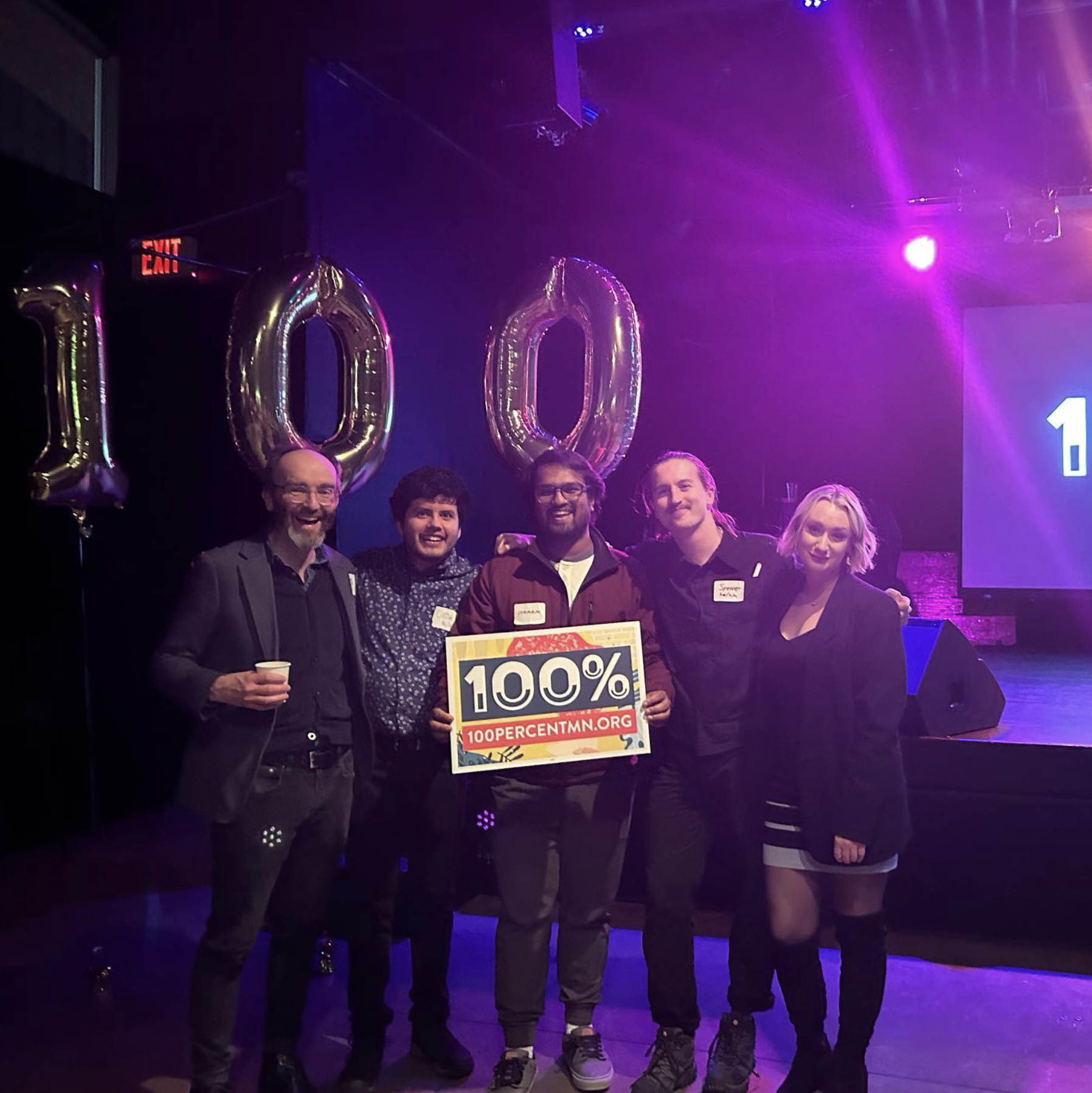
There’s still more to do. Thanks to the people around me and fact that we have collective, organized willpower being channeled into strategic action, I feel a much greater sense of support, agency, know-how, ability, and hope compared to what I was feeling four years ago.
Today, I work within the Young Adult Coalition of ISAIAH to connect the dots when it comes to implementing the provisions of the 100 percent bill. This means spreading the word and holding leaders accountable on matters like block-by-block energy efficiency upgrades, workforce development, and protections for renters. By serving as a liaison between community members and policy makers, I aim to help make 2024 an even more fruitful year than the last.
My story started with basic interest. What’s going on? How can I help? Questions like these are all it takes for enormous change to snowball. If you’re looking for your place in it, I hope reading onward helps out.
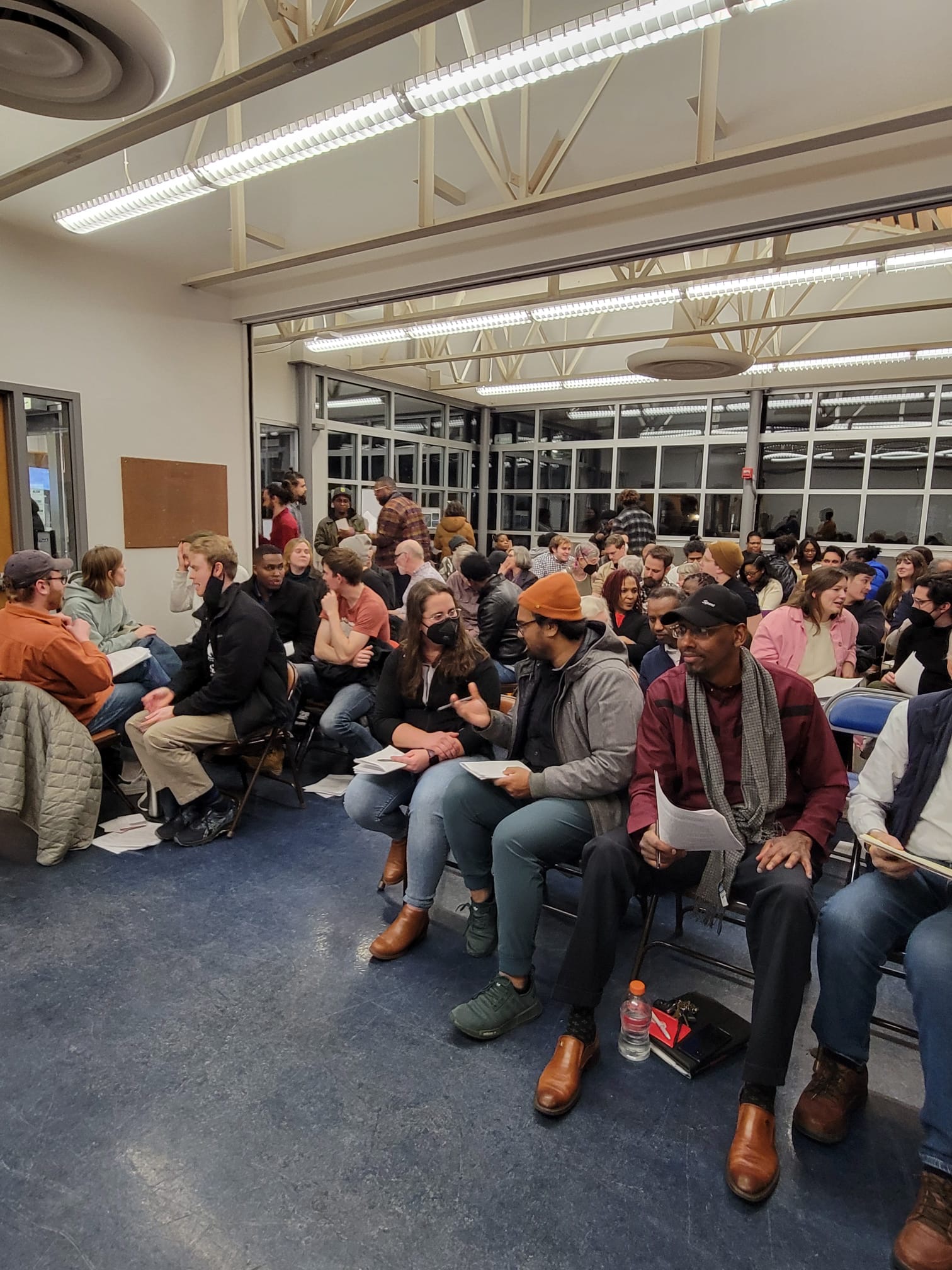
Where do we begin?
During my training, I learned that affecting change starts with self interest. In other words, the essential motivating factors that endure when you ask yourself what you care about, why you care, and why, why, why, until I get down to the sources of motivation regarding a particular issue, policy, or cause that will carry you forward in the face of frustration, challenges, and setbacks. They can evolve over time.
If you feel compelled to uphold and advance your self interests, I recommend finding a vehicle of power, in other words, a group of organized, like-minded people that has political effectiveness.
Here are some examples:
We Choose Us—a movement for multiracial democracy in Minnesota
ISAIAH—faith based organization for safe and inclusive society
100%—a movement for Minnesota’s equitable clean energy future
UNIDOS US—Latino civil rights and advocacy
What does organizing look like?
The act of community organizing can take multiple forms, depending on the goals. Below are some tools I’ve grown familiar with in my work, and a brief description of how it can help advance interests.
Self interests: identifying your personal stake in an issue is the start of all work that follows. Getting clear on what will keep you motivated is essential to holding not only yourself accountable, but fellow organizers and those in positions of greater power, such as legislators.
1-on-1s: in a community organizing context, this is a specific type of conversation with the purpose of exchanging self interests, building common ground, establishing a public relationship, and potentially propositioning and agreeing on joint actions steps.
House parties: this is gathering of people with shared interests coming together for the purpose of airing grievances and planning actions while also having a good time. It’s helpful to think of this as a 1-on-1, but scaled up. A form of this technique was used by workers during the Delano Grape Boycott of the late 1960s.
Power analyses: this is an exercise by which stakeholders of an issue are ranked and positioned on a two-axis system, ranging from disagree to agree on the x-axis, and low influence to high influence on the y-axis. It is used to identify allies and where to focus energy so that high impact targets can be leveraged.
Canvassing and research visits: Both of these are a form of information gathering, either via purposeful survey of citizens or more specific meeting with experts and stakeholders in the field.
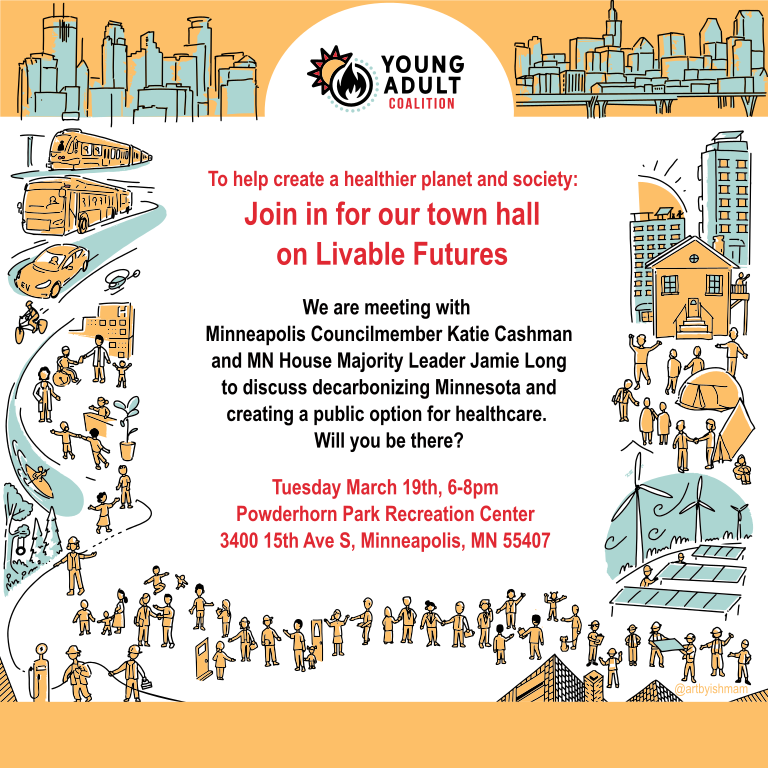
Strategy and town hall meetings: this is where discourse within organizations or across organizations happens—where decisions are made, actions are planned, and questions asked and elucidated.
Design: Today, visual communication can go a long way to inform, inspire, and rally support, especially via social media platforms. Design can be a powerful and effective tool for collective action.
What’s the latest? What’s next?
My personal attention has primarily been on climate causes.
Currently, as of March 2024 in Minnesota, there is a high degree of focus on neighborhood-by-neighborhood decarbonization and workforce development to make the clean energy transition a reality. Efforts are underway.
The following links to presentations by 100% and from the state’s website provide the details in higher resolution than I can:
The next step in our clean energy transition
Neighborhood-scale decarbonization: a briefing for Minnesota
Implementing MN’s new climate and clean energy laws
Going geothermal? You could soon score a rebate
Minnesota Climate change trends and data
Top 5 climate success stories of 2023: victories build up for environmental justice advocates
Minnesota takes action on climate change
So, what’s next? It would seem a continuation of the trend: steady implementation of the infrastructure that enables us to switch from fossil fuels to renewable energy sources, sector by sector.
“The 100 percent bill establishes a standard for utilities to supply Minnesota customers with electricity generated or procured from carbon-free resources, beginning at an amount equal to 80% of retail sales for public utility customers in Minnesota in 2030 and increasing every 5 years to reach 100% for all electric utilities by 2040.”
For other issues, the MN State Legislature’s database can be searched by topic for active bills and their current status:
Search active bills in Minnesota State Legislature by topic
Another helpful resource are your local government agency’s social media accounts, for example, the Minnesota Senate YouTube channel:
Minnesota State Senate Media Services
Staying on top of things is difficult, no doubt. But hopefully these links will help guide you to the pulse of topics you’re interested in the most.
What are some ways to get involved?
I’ve gathered some resources for how to engage on the climate front:
Join in collective stewardship of our natural resources:
Great River Greening: Get Involved
Become a champion for progressive policy and your community:
100 Percent MN: Do Something
Learn more to actualize a just, equitable clean energy transition:
Minneapolis Foundation: Climate Re-action
Do you know who represents you? Learning that is a great place to start.
Find out who represents you
Navigating fear and cynicism: how I stay motivated
For a long time, I thought I needed to be a “political person” to be involved in politics. I thought I needed to be up to date on policy details, know legislators by name, talk the talk, wear a suit, etc.—before I could even feel qualified to express myself in a public forum, let alone have any impact. Chalk it up to being a (now recovering) perfectionist. I thought politics was for people with Poli Sci degrees.
Since then, I’ve learned that public testimony is given dedicated time and space in governance settings. The public voice is not only heard, but taken into account. I’ve learned that while being clear, informed, and authentic about one’s self interests is essential, being a political expert is not. It’s neither necessary nor expected.
Naturally, my fear also rose out of the possibility of appearing naïve, especially in the face of opposing arguments. My fear of sounding naïve would often cause me to hesitate or keep me from saying my piece at all. That sucked because while I don’t always have the best fancy, lawyer-y argument, what I do have are convictions, vision, and goals about what I want to see enacted around me—both for my own sake, those I care about, and the generations to follow. To say nothing at all in one of the few places it would matter felt like a waste of time.
To navigate myself out of fear, it has helped to ask myself: is my knowledge sufficient to support the points I’m trying to make? What happens if I stay silent? What is the cost of inaction? More often than not, the cost is a feeling of regret afterward, particularly the regret of missing an opportunity. Moreover, I wouldn’t want to neglect the fact that the vast majority of people are kind and will at least hear me out, even if they don’t agree. In a public forum, reminding myself that people are there to listen, that I would at the very least be heard, and that what I have to say is important has reliably dissolved my fear.

When faced with staunch cynicism, say, for example, when knocking on a stranger’s door and Zero Sugar Clint Eastwood answers, it can be difficult to navigate to something meaningful in the moment. But it helps, I’ve found, to extend respect, empathy, and then support, or value—in that order. Sometimes, you get a hard ‘no’ right away and you just say ‘thank you’ and move on. Other times, you can at least bond over shared pain points. And sometimes, a door knock can turn into a whole brainstorm sesh about how to improve public transit. Those ideas can then find their way onto a survey response sheet or a town hall with legislators, and thereby quickly onto draft policy.
One thing that has been astounding to me is how few degrees of separation there are between good ideas and actual policy.
Cynicism can be founded on reality though, and take multiple forms: from “the system is broken, why bother” to “any change is futile because we have to dismantle capitalism first” to “what can I possibly do” to “it’s hopeless, the world is on an irreversible course” to the flat out “addressing the climate crisis is not in my self interest”—these feelings denial, distrust, defeatism, and dismissal are commonplace for a reason, especially in the divisive discourse of today’s America.
When met with this, I respond with a desire to understand; people have reasons behind their cynicism, or their less-than-enthusiastic-ness—what are those reasons? We’ve all been witness to how dysfunctional government can be. Does that mean we disregard this indelibly important organizational structure and mechanism of power completely? What is within our control? What is the cost of doing nothing? Isn’t defaulting to cynicism the same thing as handing over your agency? What success stories can be written from here?
Incremental progress is better than no progress. Not only is it more achievable, but it’s also highly salient in a democracy as incremental changes build momentum for further progress to follow. If people always gave up whenever something seemed daunting, we wouldn’t have child labor laws, women’s suffrage, or footprints on the moon.

From there, a response to cynicism can go multiple directions. It can help to cite examples of wins that seemed impossible at first but still managed to happen: the Civil Rights Act, Obama getting elected, gay marriage. When engaging the cynic, it can help to unearth common ground and reassure them they are not alone. It can help to exchange self interests and make a proposition for them to connect with others.
Far too many people I know acquiesce to helplessness when it comes to the state of our city, country, and world. I don’t blame them. I vacillate in and out of it too. But I’ve learned it’s worthwhile to put in the effort to make my voice heard, especially with organized people. It doesn’t do anyone any good to give up before even trying.
Anarchy may be tempting. Authoritarianism may be an agent of immediate change compared to the work of radical democracy and organized constituencies, but creates counterproductive instability.
Whenever I feel myself drifting into a fuzz—somewhere between numbness and frustrated irritation—I find it catalyzing to revisit this video, which was shared with me and my cohort during the 6-week organizing course hosted by 100% MN. It features artwork and narration by Ricardo Levins Morales, a local artist and activist. It strikes a chord with me because it articulates a powerful and universal truth: we are the product of those before us, just as those that come after us will be. We owe future generations our best in the present.
Perhaps it’ll strike a chord with you:
A better future is happening
30 years old now, I’ve come to not only hear but truly understand the adage “the only constant in life is change.” I figure I might as well be a part of it. Change is constant, and no person is powerless to shape it.
When organized under common interests, we gain emergent capabilities that individually, we’d be pressed to even imagine. Just like individuals in a murmuration of starlings, one’s movements affect those of their neighbors. It helps to remember that the role we each play in society amounts to something greater than any one person.

Since returning from Bangladesh, “think global, act local” has taken on new meaning for me. My guiding self interest continues to be one rooted in creating a safe, happy, and healthy future for myself and my community, connecting with like minds, and leading by example. I maintain that Minnesota is uniquely equipped to blaze a needed trail.
When it comes to national politics, it’s so easy to feel overwhelmed and then promptly tune out. There’s so much bad news, all the time. I’ve given myself permission to tune out, and tune into the things that cultivate my well being and agency. What I have the most control over is what’s happening immediately around me. Over the past few years, it’s been more than worth my time to figure out where I fit in.
When I threw my name in the hat for 100%’s newsletter, I had no idea it would lead me to where I am today: feeling like I have a real stake in, and affect on, what the future looks like. That feeling has changed how I live my life. Organizing helped me find belonging and purpose.
If you feel helpless or hopeless about the way things are going, know that the work is underway. There are so many success stories yet to be told. If you have the capacity, I highly recommend finding an org, attending a meeting, dipping a toe in, and gauging what level of involvement feels right for you, especially at the local level.
Collective effort affects change over generational timescales. It feels like we have a long way to go—like we won’t be able to reap all the benefits of the work we do necessarily—but it also doesn’t hurt to revel, for a moment, in just how far we’ve come.

 Ishmam Ahmed
Great stuff, Ishmam! We’re waaaay overdue for a talk about policy and the energy transition. Keep it up💯